Food safety has never been more important. Across India, consumers are becoming increasingly conscious of what they eat, where it comes from, and how it is produced. Milk, paneer, ghee, and other dairy products sit at the center of this conversation, as they are widely consumed, perishable, and directly linked to human health.
In this context, local, farmer-linked dairies offer a solution that addresses safety, quality, and sustainability, ensuring that food is not only nutritious but also trustworthy.
The Problem with Industrial Dairy Supply Chains
Many modern dairy products are mass-produced and distributed over long distances. While this allows scale, it introduces several challenges:
- Extended supply chains: Milk may travel hundreds of kilometers before reaching households, increasing the risk of contamination.
- Preservatives and additives: To extend shelf life, some producers rely on chemicals that compromise taste and nutrition.
- Opaque sourcing: Middlemen often obscure where milk comes from, making it difficult to ensure hygiene or animal welfare standards.
These challenges make food safety a major concern, particularly in urban households where consumers rely entirely on packaged milk and dairy products.
The Local, Farmer-Linked Model
Farmer-linked dairies operate differently. They maintain direct relationships with local farmers, creating a transparent, traceable supply chain. Key benefits include:
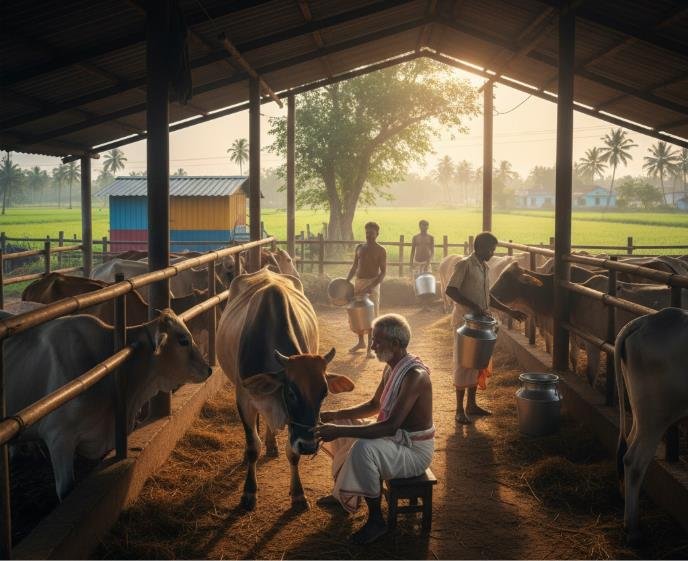
- Freshness at the Source Milk is collected daily from nearby farms, ensuring minimal storage time before processing. Reduced time from farm to fridge preserves taste, texture, and nutrients.
- Hygiene and Safety Direct monitoring of milking practices Veterinary care and health checks for livestock Immediate refrigeration and cold-chain logistics
- Consistent Quality Fat content, SNF (solids-not-fat), and other parameters are monitored per farm. Fresh milk ensures superior paneer, ghee, curd, and khova.
- Empowered Farmers Transparent payments and direct procurement Support with feed, veterinary care, and insurance Sustainable livelihoods reduce dependence on exploitative middlemen
Why Safety Begins at the Farm
The health of dairy animals directly impacts milk quality. Problems such as poor hygiene, unhealthy feed, and lack of veterinary care can lead to:
- Contaminated milk
- Reduced nutritional content
- Higher risk of bacterial growth
Farmer-linked dairies emphasize care at the source:
- Regular health monitoring of cows and buffaloes
- Proper feed and clean water
- Safe milking environments
The result is milk that is clean, wholesome, and safe for consumption.
Benefits of Local, Farmer-Linked Dairies for Consumers
- Traceable Milk Supply
Every litre is linked back to a specific farm, offering accountability and transparency. - Natural Nutrition
Milk retains its natural proteins, calcium, and vitamins when collected and processed quickly. - Taste and Freshness
Fresher milk produces better-quality paneer, curd, ghee, and khova. - Trust and Reliability
Consumers know where their milk comes from, reducing anxiety about adulteration or harmful additives.
Environmental and Community Impact
Supporting local dairies also benefits sustainability:
- Reduced transportation distances lower carbon footprint.
- Farmer-linked models strengthen rural economies.
- Local dairies often adopt environmentally friendly practices, such as managing cattle waste responsibly.
This creates a virtuous cycle: safe food for consumers, steady income for farmers, and positive environmental impact.
Case Study: Karnataka’s Malnad and Hassan Belt
Regions like Chikmagaluru, Shivamogga, and Hassan are ideal for local dairies:
- Climatic advantage: Cooler temperatures and natural pastures improve milk quality.
- Community engagement: Local farmers follow traditional, ethical practices.
- Traceability: Direct relationships make monitoring hygiene and quality easier.
Dairies sourcing from these areas can consistently deliver milk that meets high safety and nutritional standards.
How Technology Enhances the Farmer-Linked Model
Modern farmer-linked dairies combine tradition with technology:
- Digital passbooks: Farmers can track milk collection and payments.
- SMS alerts: Consumers and farmers receive real-time updates about milk quality.
- Cold-chain monitoring: Ensures milk stays fresh from farm to home.
This integration of tech and tradition ensures a reliable, safe, and high-quality supply chain.
Supporting Small Farmers Protects the Food Ecosystem
When consumers choose local, farmer-linked dairies:
- Farmers are incentivized to maintain animal health and milk quality.
- Communities benefit from sustainable income.
- Urban households receive safer, fresher, and more nutritious milk.
It is a simple choice with far-reaching consequences.
FAQs: Local, Farmer-Linked Dairies
- How do farmer-linkeddairiesensure milk safety?
Through direct sourcing, veterinary care, hygienic milking practices, and cold-chain logistics. - Are localdairiesmore nutritious than industrial milk suppliers?
Yes, milk processed shortly after collection retains higher proteins, vitamins, and natural fats. - How do these dairies support farmers?
Transparent payments, feedassistance, veterinary support, and insurance create stable livelihoods. - Can farmer-linked milk be trusted in urban markets?
With proper cold-chain and processing facilities, urban consumers can enjoy fresh, safe milk. - What products can be sourced from local dairies?
Milk, paneer, ghee, curd, buttermilk,khova, and other traditional dairy foods.
Conclusion: The Future is Local and Transparent
In India, food safety is inseparable from supply-chain integrity. Farmer-linked dairies represent a sustainable model where nutrition, trust, and livelihoods intersect.
By prioritizing local sourcing, transparency, and freshness, these dairies deliver safe, wholesome, and reliable dairy products — proving that the future of safe food lies in community-driven, farmer-first practices.
For households and institutions alike, supporting local, farmer-linked dairies is not just about quality today; it’s about ensuring a safer, healthier food ecosystem for the generations to come.
About Arna Dairy
Established in 1940 as Pankaj Dairy, Arna Dairy Farm Private Limited is Bangalore’s oldest family-run dairy, proudly rooted in Karnataka. With over 85 years of heritage, Arna stands for purity, ethics, and community care. Supplying fresh dairy products to thousands of households and premium hospitality brands, Arna Dairy works with 17,000 farmers across Hassan, Chikmagaluru, and Shivamogga to deliver high-quality milk with a promise of trust and transparency.
Contact Arna Dairy
📍 Registered Office: SY NO-80/3, Kyalasanahalli , Hennur Airport Road, Bangalore, Karnataka – 560077, India
📧 Email: info@arnadairy.in